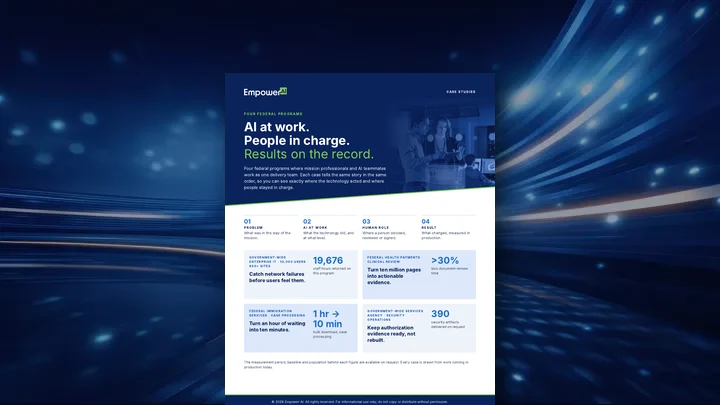

Government healthcare programs lose billions of taxpayer dollars annually to improper payments, yet traditional detection methods remain painfully inadequate. Manual document review processes that rely on teams of nurses and coders to examine unstructured clinical records are not only time-consuming and labor-intensive, but also highly susceptible to human error and oversight. As audit volumes continue to grow and detection accuracy requirements intensify, federal agencies face mounting pressure to identify these costly discrepancies without expanding their workforce or compromising quality standards.
This case study explores how artificial intelligence is revolutionizing improper payment detection by addressing the fundamental challenges that have long plagued manual review processes. The solution presented demonstrates how agencies can achieve scalable document analysis that accelerates review times while dramatically improving consistency in identifying fraudulent claims. By automating the extraction of relevant evidence from complex medical records, organizations can boost their audit capabilities and recovery rates while ensuring taxpayer dollars are protected.